


In total 562 Para athletes from 31 countries competed in 122 medal events across five sports. Ice sledge speed skating featured for the last time in the Paralympic Winter Games at Nagano 1998. Norway topped the medals table.
COMPETING NATIONS AND ATHLETES
As with the Lillehammer 1994 Paralympic Winter Games, Nagano 1998 set a new record for the number of competitors. A total of 562 Para athletes (440 men and 122 women) from 31 countries competed at the Games.
With 67 Para athletes hosts Japan had the biggest delegation followed by USA (49) and Norway (43).
Japan (14) had the most female Para athletes.
Four nations - Armenia, Iran, Slovenia, South Africa and Ukraine – made their Paralympic Winter Games debuts.
SPORTS
The Nagano 1998 Paralympic Winter Games featured 122 medal events across five sports – Para alpine skiing, Para biathlon, Para cross-country skiing, Para ice hockey and ice sledge speed skating.
In Para alpine skiing 229 Para athletes from 26 countries competed in 54 medal events covering downhill, giant slalom, slalom and Super-G.
Twelve Para biathlon medal events brought together 108 Para athletes from 19 countries, while 39 medal events in Para cross-country skiing attracted 213 athletes from 24 countries.
After its debut with five teams at the Lillehammer 1994 Paralympic Winter Games, the Para ice hockey competition featured seven nations.
Ice sledge speed skating involved 24 Para athletes from four countries who competed in 16 medal events. The sport has not been included in the Paralympic Winter Games since Nagano 1998.

OUTSTANDING PERFORMANCES
After wining nine medals at Lillehammer 1994, Norway's Ragnhild Myklebust added to her vast collection of medals. She topped the podium in all four of her Para cross-country skiing events and also took gold in the women's 7.5km Para biathlon event.
Four athletes won four gold medals apiece. They were Spain's Magda Amo, and Switzerland's Rolf Heinzmann in Para alpine skiing, Russia's Valeri Kouptchinski in Para cross-country skiing and Norway's Knut Lundstroem in ice sledge speed skating.
Results
The top three of the medals table was the same as it was four years earlier. Norway led the medals table for the second successive Games with 18 gold, nine silver and 13 bronze medals. Germany and USA were second and third respectively. Hosts Japan finished fourth, the highest place the country has finished at the Paralympic Winter Games. A total of 21 nations won a medal with 17 winning gold.
USA topped the medals table in Para alpine skiing, Germany in Para biathlon, Russia in Para cross-country skiing and Japan in ice sledge speed skating.
Having won silver when the sport made its debut in 1994, Norway won Para ice hockey gold defeating Canada. Defending champions Sweden took the bronze.


Paralympic Torch Relay
A total of 754 relay runners covered 118.1km during the Paralympic Torch Relay which made courtesy calls to six different major cities in Japan.
OPENING CEREMONY
The theme of the Opening Ceremony was "Hope," because the Nagano 1998 Games marked the first Winter Paralympics held in Asia, as well as the last Paralympics of the 20th century. The theme originated from a painting titled, "Hope," by Frederic Watts, which expresses hope generating from despair and difficulty.

CLOSING CEREMONY
The Closing Ceremony focused on legacies that stem from hope, and thus it was full of performers and an original origami crane project.

ATTENDANCE AND COVERAGE
The Nagano 1998 Paralympic Winter Games demonstrated a rising media and public interest in Paralympic Winter sports. A total of 151,376 spectators was recorded during the Games, while 1,468 broadcast and media representatives covered the event.
The official Games website recorded a total of 7.7 million hits during that span, with one million hits rolling in on the first and second day of competition.

Medals
The Nagano 1998 Games medals were smooth with extruded text and a multi-coloured ribbon.
The front face of the medal featured the Games logo and name accompanied by the previous Paralympic logo of the three Tae-Geuks. Shards of ice decorate the background of the medal, represented the dynamism of Paralympic sports. The ribbon of the medal reflected the colours of these three Tae-Geuks - red, blue and green.
The medals, designed and manufactured by the Mint Bureau of the Ministry of Finance in Japan, weighed 124 grams, were six cm in diameter and 0.6 cm in thickness.

Mascot
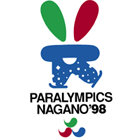
The mascot of the Nagano 1998 Paralympic Winter Games was Parabbit, directly inspired by the Games logo.
Parabbit was energetic and friendly, sporting the colours of the three Tae-Geuks with green and red ears and a blue ski suit. The mascot was designed after the Games logo, which was created to replicate the Japanese character for “naga” in Nagano in a way that resembles a rabbit.
The mascot was created by Sadahiko Kojima and was named by school children. A total of 3,408 ideas were submitted in a competition to name the mascot, and Parabbit was chosen as the winner.

Torch
The Nagano 1998 torch was constructed of aluminium and was made to reflect the traditional knot tying craft of Mizuhiki that originated from Nagano.
The Nagano 1998 torch was constructed of aluminium and was made to reflect the traditional knot tying craft of Mizuhiki that originated from Nagano.
NAGANO 1998 NEWS
View more
Polina Rozkova's fur-midable journey to the Paralympics
Latvian wheelchair curler Polina Rozkova is preparing for the Milano Cortina 2026 Paralympics with the support of Archibald the cat

Cristian Ribera targets Brazil's first Winter Games medal
Para cross-country skier Cristian Westemaier Ribera is aiming to make history at the Milano Cortina 2026 Paralympic Winter Games

Chris Vos aiming for maiden Para snowboard gold
Dutch star Chris Vos shares how Para snowboarding changed his life and his expectations for the Milano Cortina 2026 Paralympic Winter Games

Ask the Paralympic pioneers: Rico Roman on Para ice hockey
This week, some of the most decorated Paralympians of all time answer your biggest questions ahead of the Milano Cortina 2026 Paralympic Winter Games

Dani Aravich's mission beyond the medals at Milano Cortina 2026
What are Danielle Aravich's big goals at the Milano Cortina 2026 Paralympic Winter Games? Aravich joined the International Paralympic Committee on a TikTok Live to discuss everything from training tips, to goals beyond the medals and fan experience

NHK secures Milano Cortina 2026 Paralympic broadcast rights in Japan
NHK will bring the Milano Cortina 2026 Paralympic Winter Games to audiences across Japan through linear free television, digital platforms, and audio